In Thailand's real estate and M&A market, it is common for investors to acquire shares in a property-holding company rather than purchasing the underlying land directly. From a commercial perspective, such structures may offer advantages in terms of transaction efficiency, continuity of licenses, contractual relationships, and operational infrastructure. However, where the target company's primary asset is real estate, the distinction between a share acquisition and a property transfer can become increasingly blurred from a tax and regulatory perspective.


Accounting & Legal in Thailand


For many years, cloud contracting focused primarily on uptime commitments, cybersecurity obligations, disaster recovery provisions, and service credits. In 2026, however, a far more strategic issue has emerged in Thailand's public sector technology procurement environment: digital sovereignty.
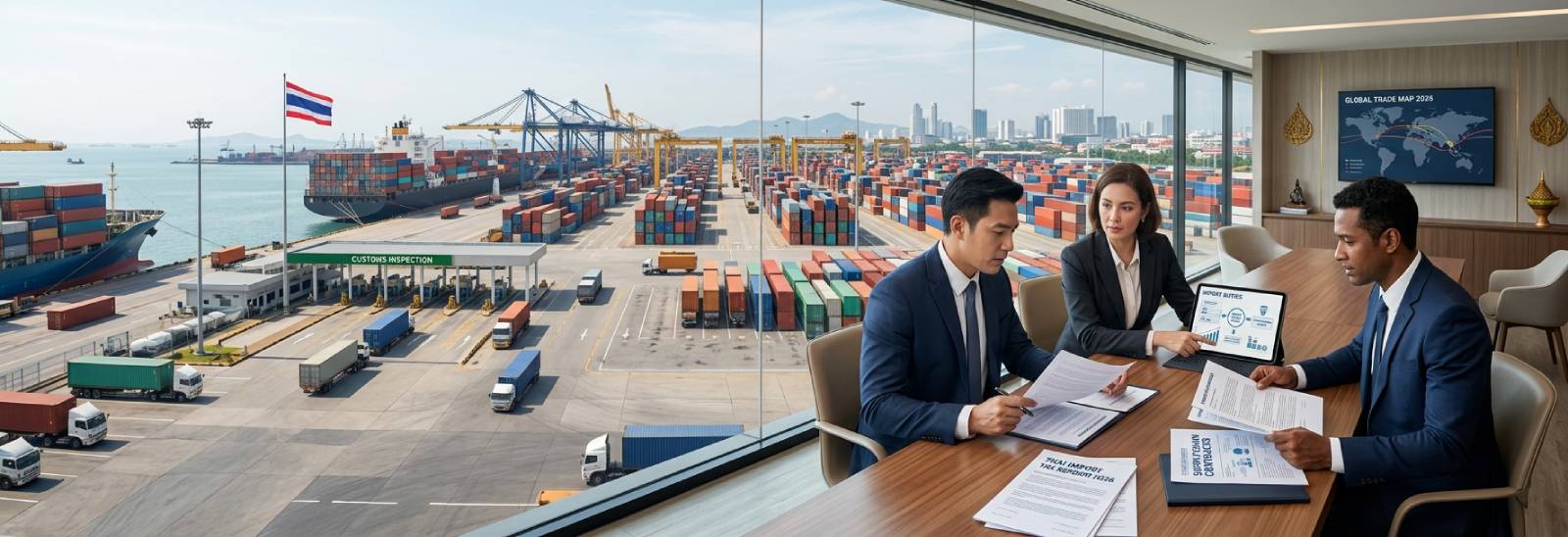
Effective 1 January 2026, Thailand abolished the customs duty exemption previously available for imported goods with a value not exceeding THB 1,500. As a result, virtually all imported products entering Thailand are now subject to VAT and, where applicable, import duties.

The regulatory landscape governing Thailand’s digital economy has undergone a significant transformation following the Trade Competition Commission of Thailand’s (TCCT) publication of its Guidelines on Multi-Sided Platform Businesses, which became effective on 25 March 2026. Rather than creating entirely new statutory obligations, the Guidelines establish an authoritative framework for interpreting the Trade Competition Act B.E. 2560 (2017) in the context of modern digital marketplaces and platform ecosystems.

Employment disputes in Thailand are not resolved through litigation alone. The Labour Court adopts a strong mediation-oriented approach, with judges actively encouraging parties to negotiate and settle disputes before proceeding to a full trial. This judicial philosophy reflects the court's objective of preserving employment relationships where possible and reducing lengthy litigation.

Thailand's labour compliance landscape has undergone a fundamental transformation. Historically, employers focused on drafting work regulations and ensuring that copies were submitted to or maintained for inspection by the Department of Labour Protection and Welfare. Today, as organisations increasingly adopt digital HR systems, the legal challenge is no longer merely whether work rules exist—it is whether the employer can prove that employees actually received, understood, and acknowledged them.
