For many years, multinational corporations entering the Thai market routinely imported global contract templates containing extensive limitation of liability provisions, broad indemnities, and comprehensive hold-harmless protections. These clauses were often designed to shift substantial commercial risk away from the drafting party and onto its counterparty. While such approaches may remain effective in certain jurisdictions, their enforceability under Thai law has become increasingly uncertain.


Accounting & Legal in Thailand


For years, exclusive supply arrangements, exclusive distribution rights, tying arrangements, and bundled commercial offerings occupied a legally sensitive area under Thailand's Trade Competition Act B.E. 2560 (2017). While these contractual mechanisms often serve legitimate commercial objectives—such as protecting investments, ensuring supply-chain stability, or maintaining brand standards—they may also attract scrutiny where they restrict market access, foreclose competitors, or create unfair barriers to trade.

For many years, organizations treated data protection obligations as a peripheral contractual issue, often addressed through a brief confidentiality or privacy provision buried within a Master Services Agreement. That approach is increasingly incompatible with Thailand's evolving regulatory environment.

In Thailand's real estate and M&A market, it is common for investors to acquire shares in a property-holding company rather than purchasing the underlying land directly. From a commercial perspective, such structures may offer advantages in terms of transaction efficiency, continuity of licenses, contractual relationships, and operational infrastructure. However, where the target company's primary asset is real estate, the distinction between a share acquisition and a property transfer can become increasingly blurred from a tax and regulatory perspective.

For many years, cloud contracting focused primarily on uptime commitments, cybersecurity obligations, disaster recovery provisions, and service credits. In 2026, however, a far more strategic issue has emerged in Thailand's public sector technology procurement environment: digital sovereignty.
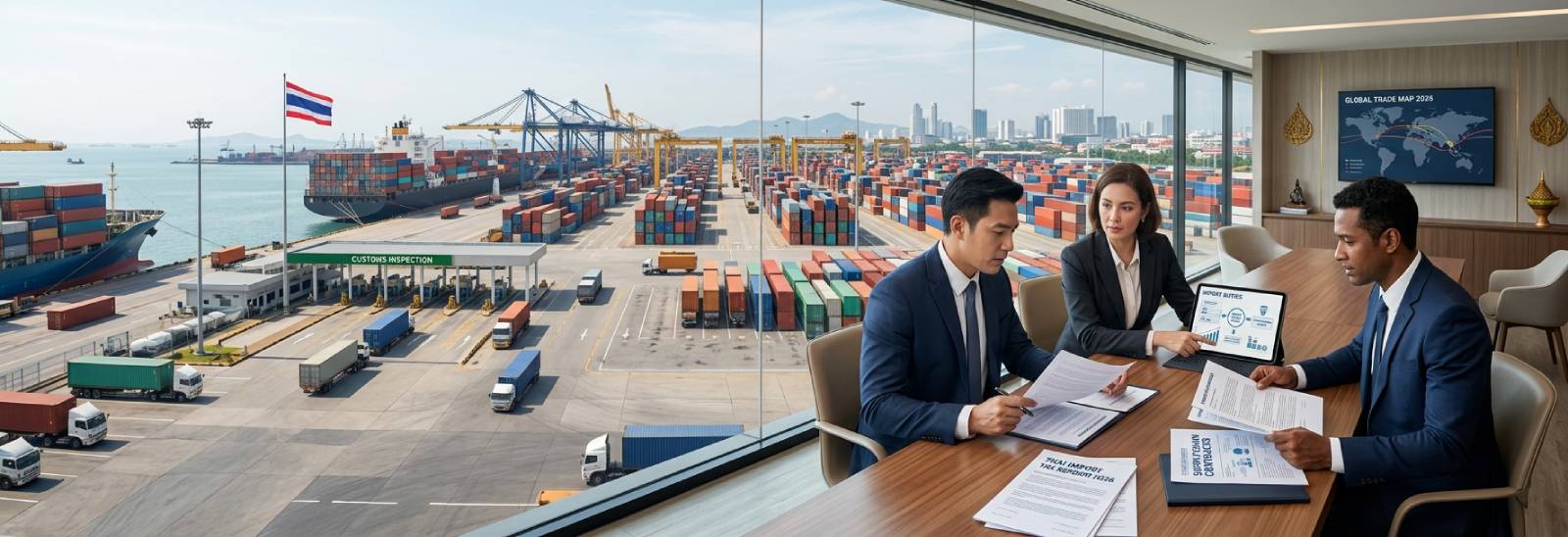
Effective 1 January 2026, Thailand abolished the customs duty exemption previously available for imported goods with a value not exceeding THB 1,500. As a result, virtually all imported products entering Thailand are now subject to VAT and, where applicable, import duties.
