


The landscape of international taxation is undergoing a profound transformation. As sustainability regulations become increasingly intertwined with global trade policy, carbon emissions are evolving from a corporate social responsibility metric into a measurable financial liability. For Thai businesses engaged in international supply chains, particularly those exporting to Europe, carbon accounting has become as strategically important as transfer pricing documentation or tax compliance.
The European Union’s Carbon Border Adjustment Mechanism (CBAM) has fundamentally altered the economics of cross-border trade by attaching a financial value to embedded carbon emissions. Companies can no longer compete solely on production costs or labor efficiency; they must also demonstrate transparent, verifiable, and accurate emissions data throughout their manufacturing processes. Consequently, tax advisors are expanding beyond traditional compliance services to provide integrated carbon tax planning, ESG advisory, and supply chain optimization.
For many organizations, the question is no longer whether carbon will affect profitability, but how effectively carbon-related costs can be managed before they become a competitive disadvantage.
Thailand’s Climate Policy Is Reshaping Corporate Tax and Investment Strategies

Thailand’s commitment to achieving carbon neutrality and net-zero greenhouse gas emissions is driving significant regulatory reform. The proposed Climate Change Act, together with the expansion of domestic carbon market initiatives and enhanced emissions reporting frameworks, signals that climate governance will become an integral component of corporate compliance rather than a voluntary sustainability initiative.
These developments create both regulatory obligations and strategic opportunities. Businesses investing in renewable energy systems, energy-efficient manufacturing equipment, digital monitoring technologies, or decarbonisation projects may benefit from investment incentives, accelerated depreciation allowances, or other tax-related support mechanisms available under existing government policies.
Forward-thinking organisations are therefore integrating carbon considerations into capital expenditure planning, recognising that environmental investments may simultaneously reduce operating costs, strengthen ESG performance, and improve long-term tax efficiency. The role of tax professionals has consequently evolved from calculating tax liabilities to advising on how climate-related investments can optimise both financial returns and regulatory compliance.
CBAM Is Driving a New Era of Carbon Accounting and Transfer Pricing
The implementation of CBAM requires exporters to quantify the greenhouse gas emissions embedded within products supplied to the European market. While the immediate compliance burden falls on importers within the EU, the commercial pressure is transmitted directly through the supply chain to manufacturers in countries such as Thailand.
This development has profound implications for transfer pricing and intercompany transactions. Carbon-intensive production processes may alter the economic value contributed by different entities within a multinational group, requiring businesses to reassess cost allocation methodologies, pricing policies, and functional analyses. Internal service charges, procurement strategies, and manufacturing arrangements increasingly need to reflect environmental costs alongside traditional commercial considerations.
Leading multinational enterprises are also adopting internal carbon pricing models to assign a monetary value to emissions generated across operations. By embedding carbon costs into budgeting, procurement, and investment decisions, businesses can anticipate future regulatory exposure while identifying opportunities to reduce emissions before external carbon pricing mechanisms become mandatory.
For tax advisors, this represents a significant expansion of scope. Carbon data must now be analysed with the same level of accuracy and documentation as financial records, ensuring consistency between sustainability reporting, tax filings, customs declarations, and transfer pricing documentation.
Carbon Governance Is Becoming a Competitive Advantage
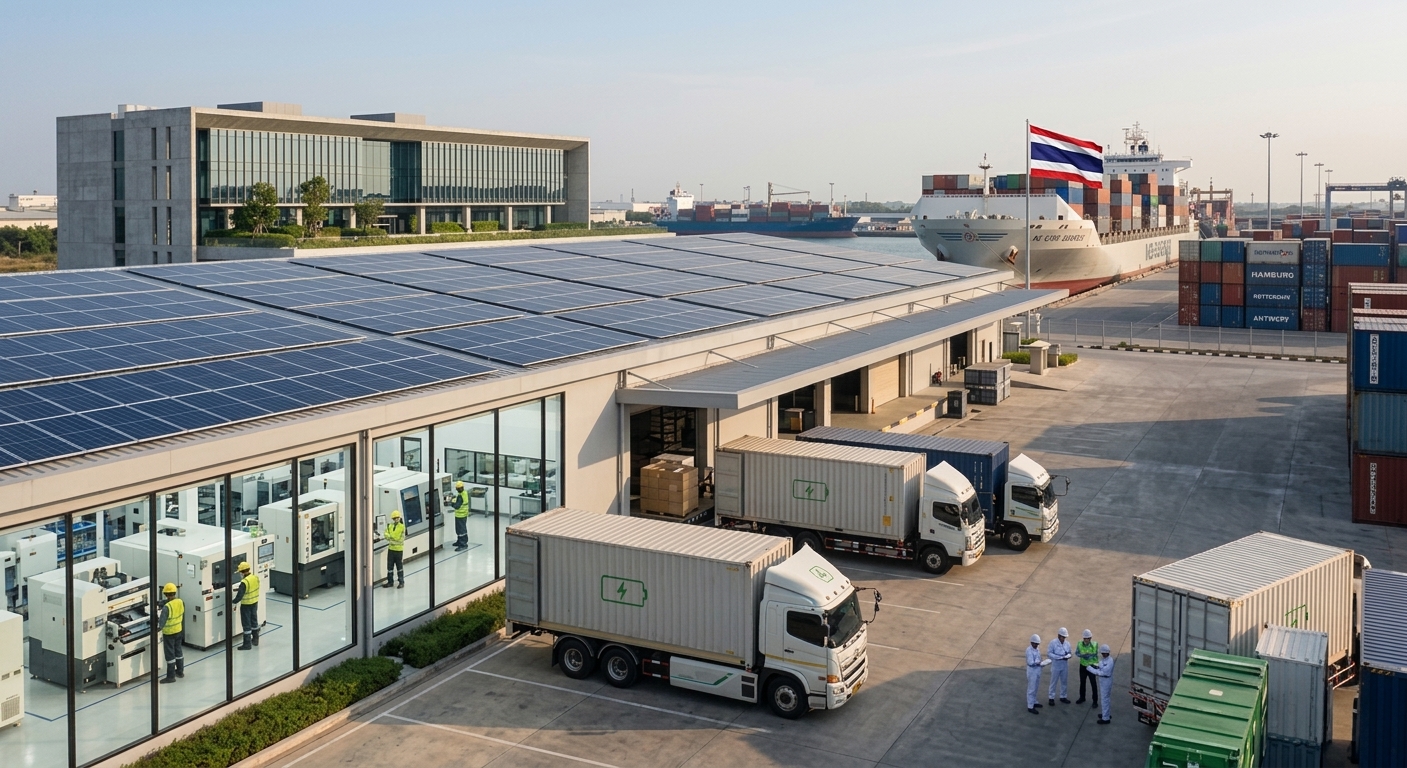
The companies that will thrive in the next decade are unlikely to be those that simply comply with environmental regulations—they will be those that strategically integrate carbon governance into every aspect of their financial decision-making.
Robust carbon accounting enables businesses to identify operational inefficiencies, evaluate the financial impact of decarbonisation investments, negotiate with international customers from a position of transparency, and minimise the potential costs associated with border carbon adjustments. Equally important, reliable emissions data strengthens investor confidence and supports access to sustainable financing initiatives that increasingly require measurable ESG performance.
For Thai exporters, carbon accounting should no longer be viewed as an administrative reporting obligation. It is becoming a critical business asset that influences tax strategy, supply chain resilience, pricing decisions, and long-term enterprise value.
As global tax systems continue to converge with climate policy, the future of tax advisory will be defined not only by expertise in legislation and compliance but also by the ability to transform carbon data into strategic commercial advantage. In this new environment, carbon is effectively becoming another form of taxable value—and organisations that understand its financial implications today will be better positioned to compete in tomorrow’s low-carbon economy.
