


A restaurant changes its point-of-sale system on 1 October. Customers still see the same prices, yet the October VAT control account suddenly carries an unexplained balance. This is a useful moment to investigate it. The Thai government announced the extension of the seven percent VAT rate through 30 September 2027. For October activity, the Revenue Department’s November calendar lists 16 November for the ordinary P.P.30 filing and 23 November for internet filing. Those dates give a Bangkok business two concrete reasons to review its first month of sales under its October settings.
Test what the customer actually pays
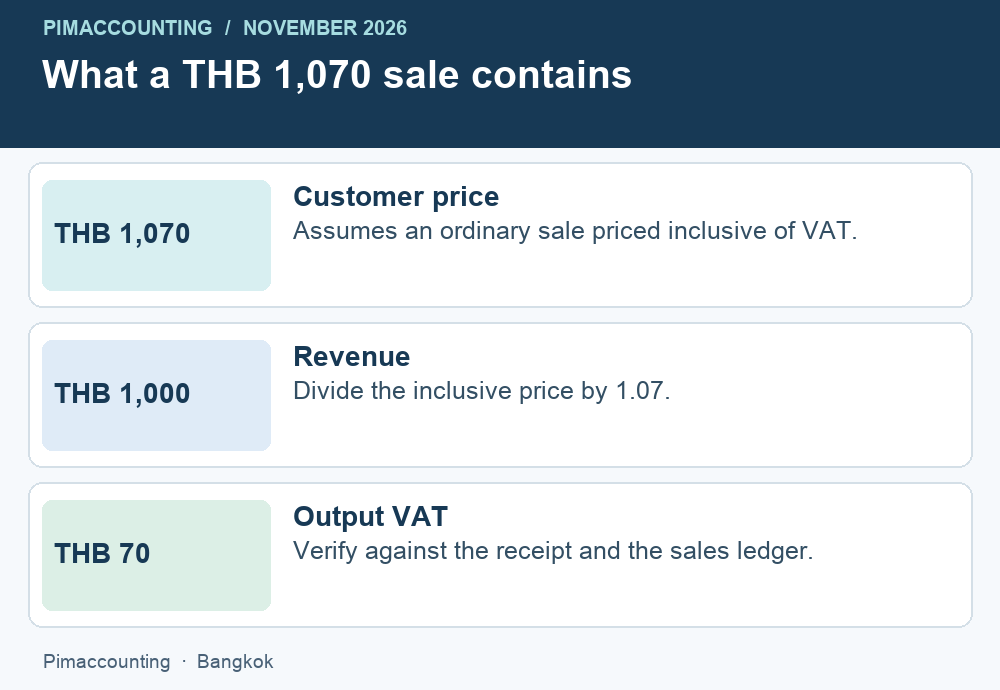
Start with an ordinary domestic sale that the business has confirmed is taxable at the standard rate. If the menu price is THB 1,070 inclusive of seven percent VAT, the sale consists of THB 1,000 of revenue and THB 70 of VAT. If the price is THB 1,070 before VAT, the customer pays THB 1,144.90. Both transactions display seven percent in the system. Only one matches the advertised inclusive price. A rate check alone will never detect the difference.
Ask a cashier to produce a sample receipt from each sales channel. A physical till, a delivery application and a corporate invoice may all use different product codes. Compare the customer price, discount, taxable base and tax printed on each document with what entered the ledger. Where a platform collects cash and deducts a fee before paying the restaurant, obtain its settlement report. The amount arriving at the bank may represent sales less commission, discounts, refunds and other adjustments. It is an unreliable substitute for gross sales.
Keep the October cut-off visible
Construct a short bridge from till reports to the general ledger. Begin with gross sales by day. Show returns, cancellations and documented adjustments separately. Identify invoices issued outside the till, such as a catering order billed directly by the finance team. Compare the result with posted revenue and output tax. Investigate the difference before entering a closing journal. A correction with no source document can make two totals agree while concealing the reason they differed.
Cut-off problems often appear around midnight or at month-end. A platform may report a delivery by settlement date while the restaurant records it by order date. A customer may pay a deposit before the event. Ask the accountant to determine the applicable tax point using the actual transaction and supporting documents. Do not move the sale into whichever month makes the bank reconciliation easier. Keep the original dates in the bridge so that a reviewer can follow the decision later.
Review purchases with the same discipline
For input VAT, create a second schedule tied to the purchase records. Separate items supported by appropriate tax invoices from items awaiting documents and from amounts requiring a decision on eligibility. A supplier quotation or bank transfer proves something happened but may not provide the evidence needed to claim input tax. Likewise, a correct supplier invoice does not establish that every purchase is eligible for recovery. Give unresolved items an owner and a follow-up date instead of treating them as automatically recoverable.
Consider a THB 10,700 supplier bill with a tax line of THB 700. Your company received the goods, but the invoice identifies a different company in the group. Paying the bill from the right bank account does not repair the purchaser’s identity on the document. Ask the supplier to review the facts and follow the appropriate correction process. Keep the original record, correspondence and replacement documentation together. The person reviewing next month’s purchases needs to know why the item was held and what changed.
Keep exceptions separate from the headline rate
The government announcement concerns the reduced standard rate. It does not classify an export, an exempt activity or an overseas service for a particular business. Create distinct tax codes where the underlying treatment differs and restrict who can change them. An empty tax field should mean “needs review”, not silently become a zero-rated sale. Test at least one transaction from every active code when changing accounting software or reopening an inactive branch.
A practical management review needs only a handful of numbers: gross sales by channel, output VAT, purchases awaiting correct invoices, eligible input VAT and the amount expected to be paid or carried forward. Put the October return beside September’s and explain the largest changes in plain language. A higher payment can reflect a genuine increase in sales, a timing difference or missing supplier evidence. Those explanations call for different actions and have different implications for next month’s cash forecast.
Turn the return into a repeatable close
Save the approved reconciliation and submission evidence with the corresponding return. Record which channel the business used and confirm the payment separately. Next month, start with the list of open October exceptions instead of constructing another spreadsheet from scratch. For a growing company, that carry-forward list is often more valuable than a more elaborate dashboard: it identifies which supplier to chase and which system setting still needs attention.
If your October sales, VAT report and bank settlements tell different stories, Pimaccounting can help trace the difference and set up a monthly close suited to your transaction volume. Start with Bangkok accounting services or request a VAT reconciliation review. Tell us which platforms you use and whether the difference concerns sales, purchases or both.